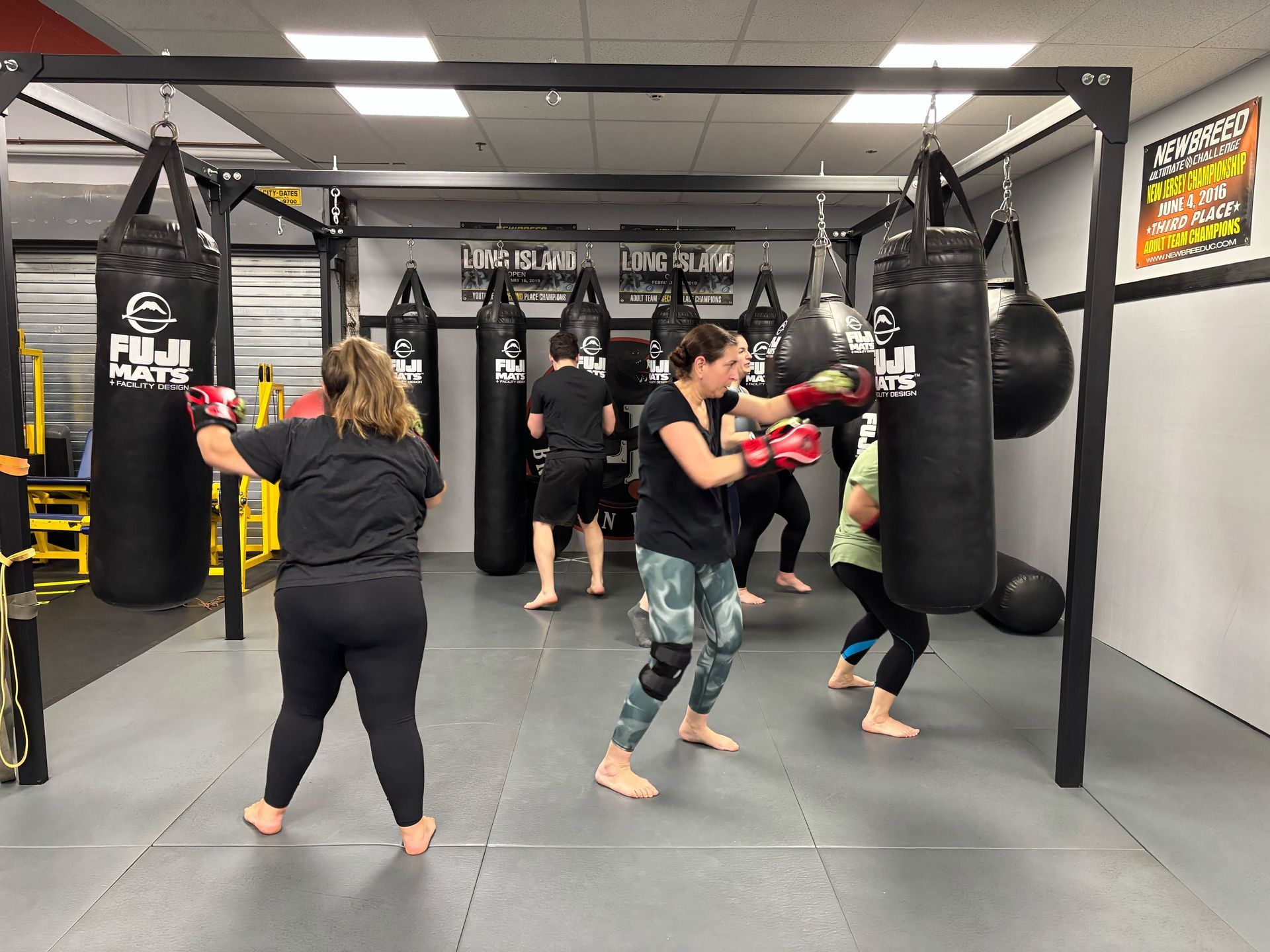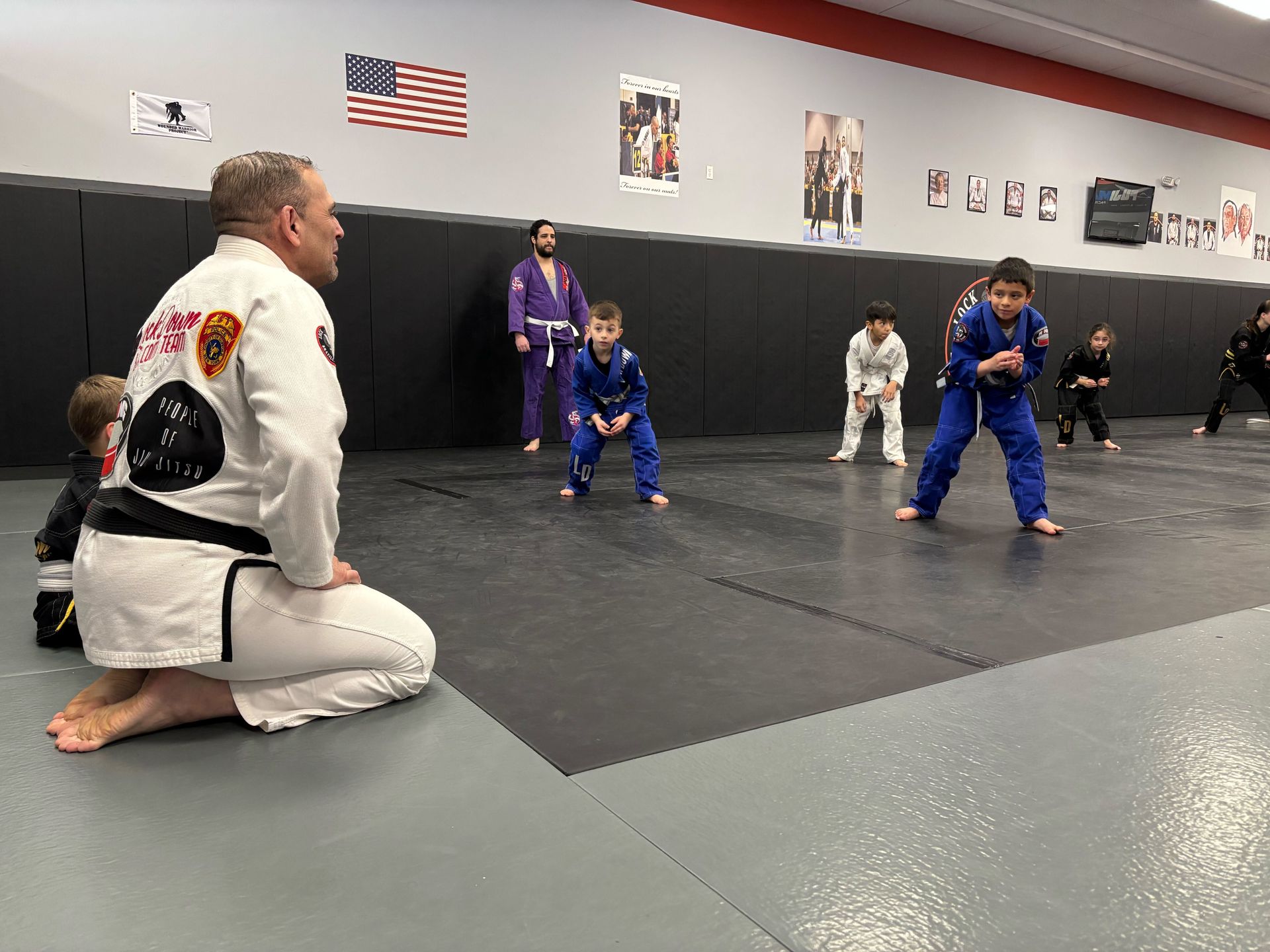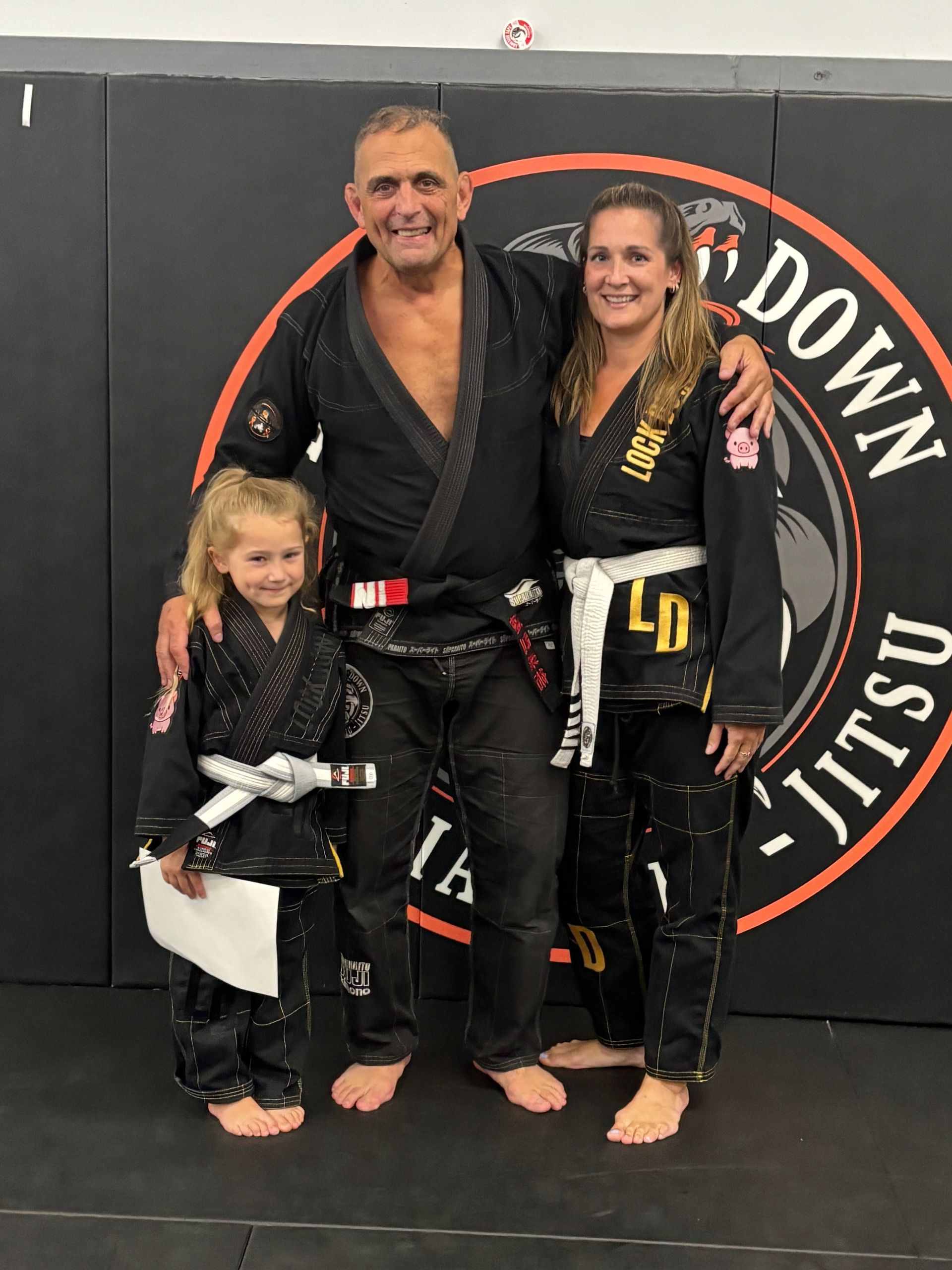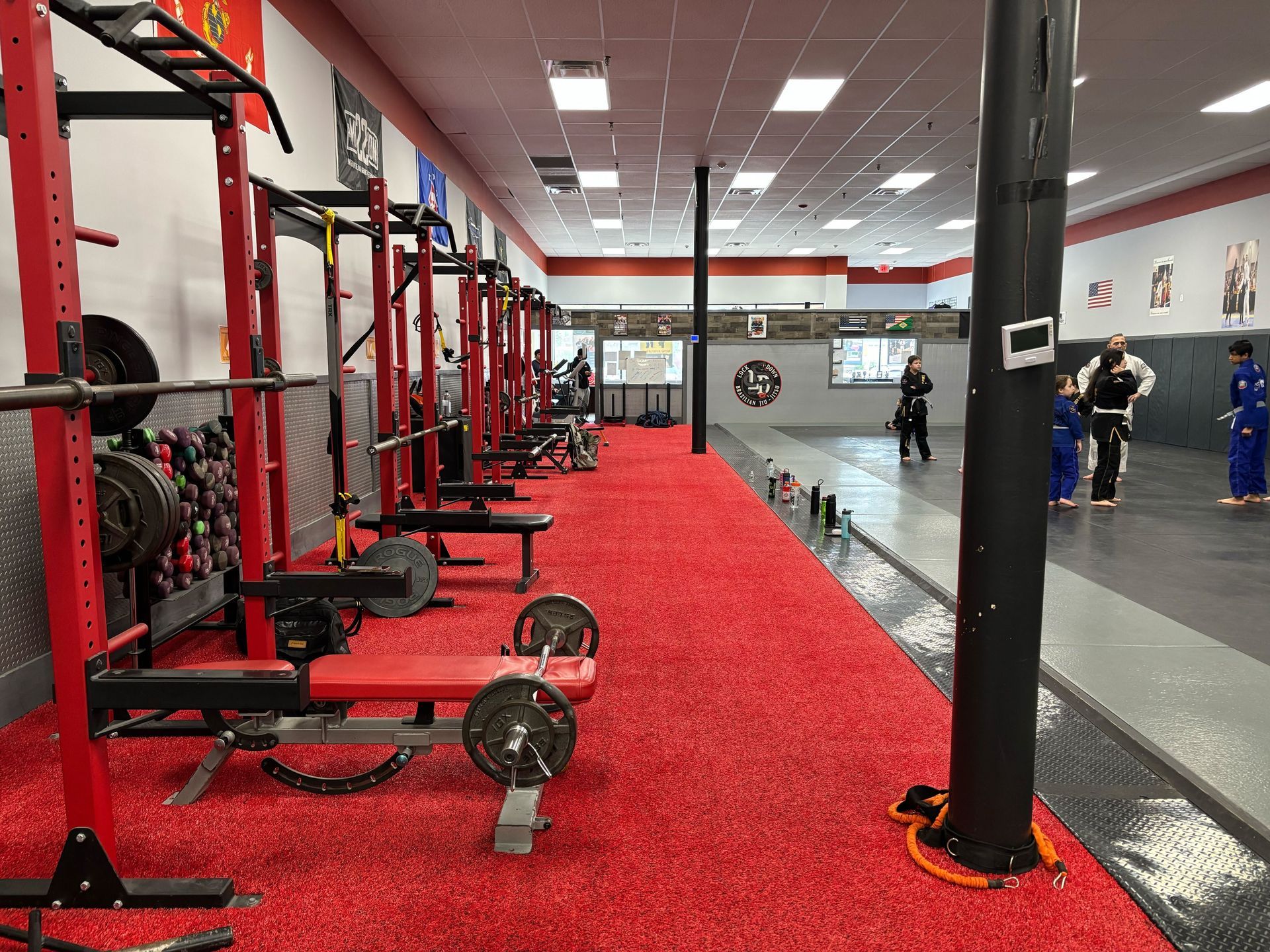
Real self-defense is what you can do under pressure, and we train for exactly that.
When people ask us whether Brazilian jiu jitsu is practical for real life, we love the question because it gets to the heart of why we teach the way we do. Self-defense is not a highlight reel, and it is not a perfect plan you execute in a calm room. It is messy, close-range, and fast, and that is why our training is built around timing, leverage, and staying composed when someone is truly resisting you.
We also hear a second question all the time in Lake Ronkonkoma: is this only for athletic adults. It is not. We coach kids, teens, parents, and older adults with a simple goal: help you build skills that scale to your body and your life. Brazilian jiu jitsu works because technique can outperform size, and that matters for kids, smaller adults, and anyone who just wants something realistic.
In this guide, we will break down how Brazilian jiu jitsu develops real-life self-defense skills for all ages, what you actually practice on the mat, and how our class structure keeps training effective and safe. If you have been looking into Lake Ronkonkoma BJJ classes or specifically Lake Ronkonkoma bjj kids classes, you will also see how the same core principles adapt to different ages without watering anything down.
Why Brazilian jiu jitsu translates to real-life self-defense
A lot of real altercations end up in clinches, trips, or a scramble on the ground. That is not an opinion, it is just what tends to happen when two people collide at close distance. Brazilian jiu jitsu focuses on the range where strikes are hard to create space for, and where control often matters more than damage.
Our approach emphasizes leverage-based mechanics: frames, angles, and weight distribution. On the mat, you learn how to keep someone from sitting up, how to get your hips out of danger, and how to use your legs and core to move a heavier person. The point is not to be tougher. The point is to be harder to control.
We train for outcomes that make sense in real situations: get up safely, create distance, hold someone until help arrives, or end a threat when you must. That is why positional dominance, escapes, and submissions are not separate topics for us. They are connected steps in a single problem-solving process.
The leverage advantage: how smaller people can control larger attackers
One reason Brazilian jiu jitsu has become the go-to self-defense system for many families is that it is not built around being the bigger, faster person. We teach you to create strong structure first, then apply pressure through angles rather than muscle.
You see this immediately in fundamental positions. From guard, you can use your legs as a distance and control tool. From side control or mount, you learn how to pin the hips and shoulders so someone cannot explosively turn. From the back, you learn how to stay attached so escape attempts waste energy. These are not theoretical positions, either. We practice them with resistance so you feel what works when timing is imperfect.
This is also why BJJ-based tactics have been adopted in law enforcement training, with studies reporting major reductions in use of force and injuries when control-focused grappling becomes part of the toolkit. When you can control a situation without escalating it, everybody tends to go home in better shape.
Pressure testing: why live training changes everything
One of the biggest gaps in many self-defense methods is the absence of live resistance. Knowing a technique is not the same as applying it when someone is fighting back. In Brazilian jiu jitsu, we bridge that gap through controlled sparring, often called rolling.
Rolling is where you learn what panic feels like and how to replace it with decisions. At first, most beginners hold their breath and muscle everything. Over time, you start seeing patterns: where your base breaks, where your arms get isolated, when your posture collapses. That feedback loop is priceless, and it is hard to replicate without a resisting partner.
We keep rolling appropriate to your level. Beginners work from structured positions and specific goals, not chaos. More advanced students train with higher pace and more complex transitions. The common thread is the same: you practice calm under pressure until it becomes normal.
What we actually teach for real-world situations
Self-defense is not just a list of moves. It is priorities. If you remember nothing else, remember this: position first, then options. When you are safe and stable, you can think. When you are off-balance, you are reacting.
Here are the core self-defense skill buckets we build through Brazilian jiu jitsu training:
• Base and posture so you can stay balanced during shoves, grabs, and clinches
• Escapes from bad positions like mount, side control, and back control so you can survive and reset
• Guard retention and recovery so you can manage distance and avoid getting pinned
• Top control and pinning pressure so you can stop someone from escalating the situation
• Submissions as last-resort tools when you must end the threat quickly, not as a first choice
• Standing-to-ground awareness so takedowns and trips do not surprise you when contact happens
Those skills show up differently depending on age and athleticism, but the foundation does not change. We build it the same way every time: learn the movement, drill it cleanly, then pressure test it with a partner who is giving realistic resistance.
Safety and confidence: training hard without training reckless
Any combat sport has risk, and we take that seriously. The goal is steady progress, not limping through the week. We coach tapping early, controlling speed, and respecting body limits, especially for new students. You will hear us talk about position and control more than ego.
It is worth noting that large organizations using grappling-based training have reported low injury rates in structured programs, including law enforcement training environments where the stakes are high. On the mat, our safety comes from a few simple habits: clear instruction, supervised rounds, and partners who understand that learning is the point.
We also teach you how to protect your neck, manage your shoulders, and avoid common beginner mistakes like posting an arm in the wrong direction. That kind of detail sounds small, but it is exactly what keeps training sustainable for months and years.
Self-defense for kids: confidence, boundaries, and anti-bullying skills
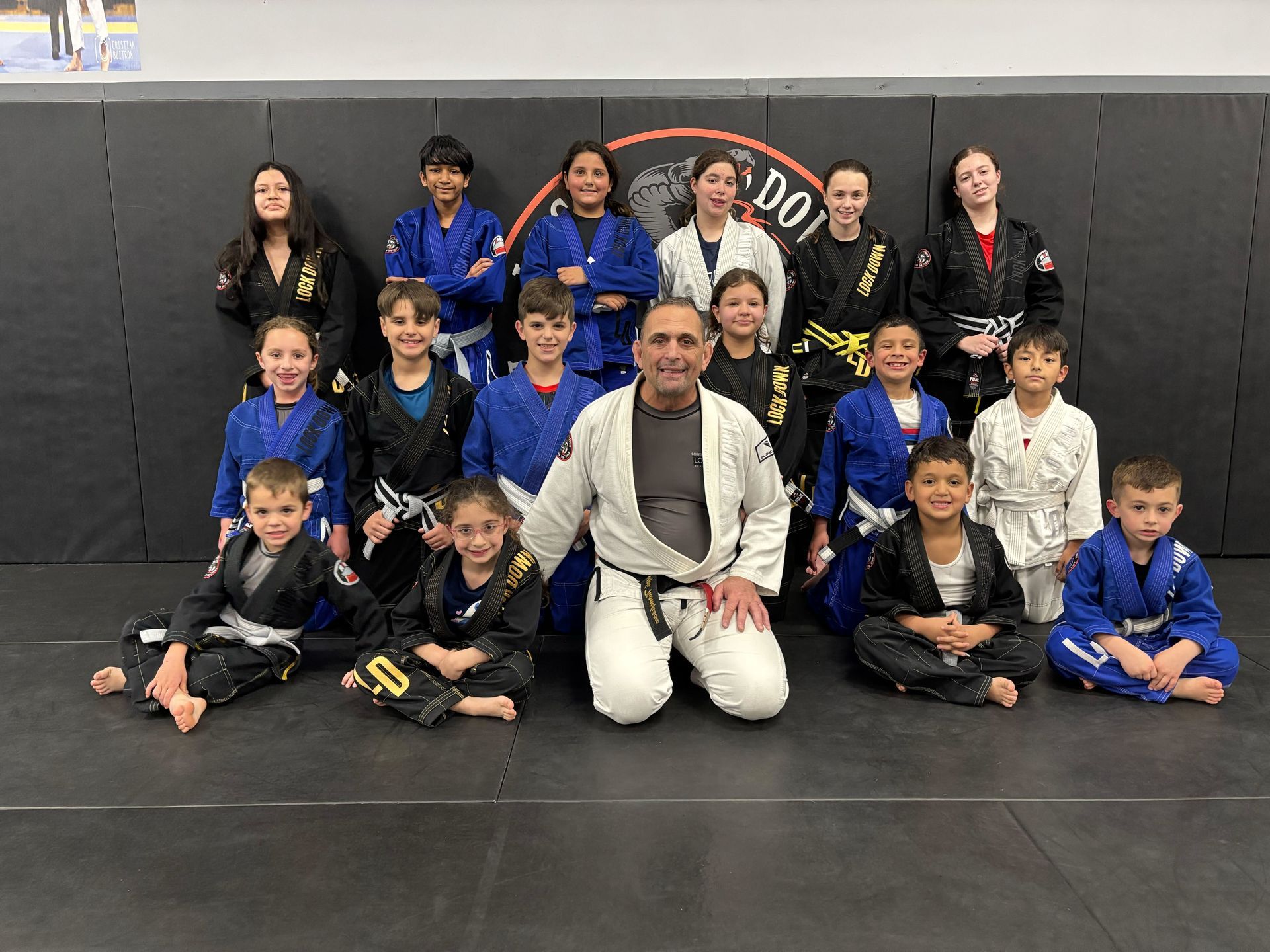
Parents looking into Lake Ronkonkoma bjj kids classes usually want two things at once: practical skills and a positive environment. We want that too. Kids do not need to learn to be aggressive. Kids need to learn to be capable, calm, and clear about boundaries.
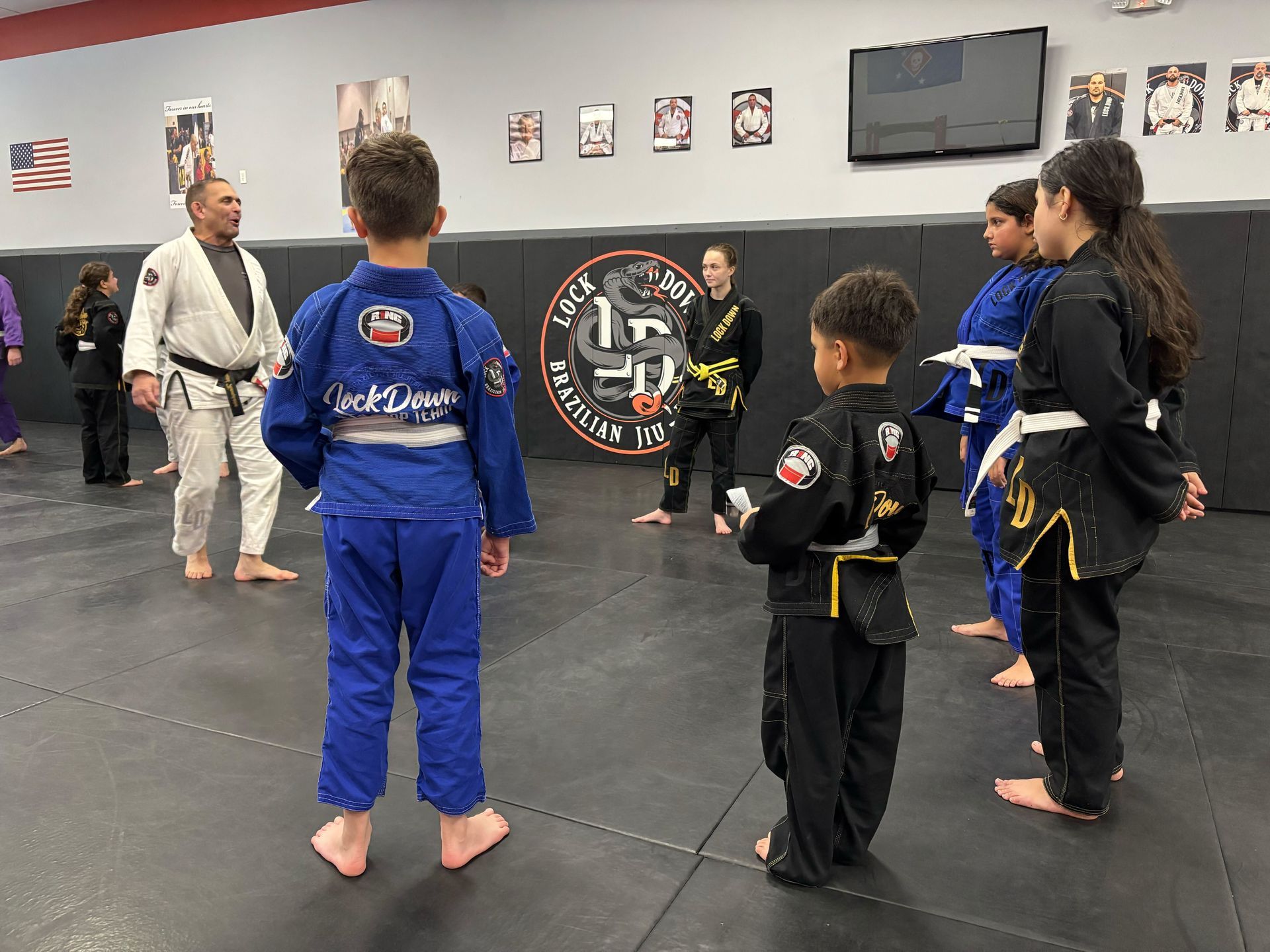
In our kids program, Brazilian jiu jitsu becomes a vehicle for life skills. We teach how to stay balanced, how to break grips, how to get back to your feet, and how to control space with smart movement. We also teach listening, patience, and how to be a good training partner, which is a bigger deal than it sounds.
Live training for kids is structured and supervised. It is not about “winning.” It is about learning what pressure feels like and staying composed anyway. Research on BJJ practitioners shows links to increased resilience, self-control, grit, and life satisfaction with training experience, and those qualities matter just as much for a child navigating school as they do for an adult navigating a stressful job.
Teens and adults: practical protection, fitness, and mental toughness
Adults often come in for self-defense and stay for everything else. Brazilian jiu jitsu demands full-body coordination, but it is also strangely meditative once you get into it. You are solving problems in real time: weight shifts, grips, angles, timing. You do not have much mental space left to worry about your email inbox.
Physically, you develop strong hips, legs, and core, plus grip strength and mobility that carry into daily life. Mentally, you learn to accept discomfort and keep thinking. That is a real skill. Studies have found that more experienced BJJ practitioners tend to report higher mental strength and resilience, with small positive correlations between training time and traits like self-efficacy and self-control.
For self-defense specifically, we emphasize de-escalation through control. If you can hold top position, isolate movement, and create space to disengage, you can often resolve an incident without throwing strikes. That is valuable for anyone, and especially for people who want defensive options that do not rely on hurting someone.
Older adults and beginners: starting where you are
You do not need to be in shape before you start. Training is how you get in shape. We scale intensity, modify movements when needed, and help you build the fundamentals that make everything else feel safer. If you are older, returning from an injury, or simply cautious, we keep your progress steady and realistic.
Brazilian jiu jitsu is uniquely suited for this because it rewards efficiency. You are not trying to out-sprint anyone. You are learning how to frame, breathe, and use angles so you are not carrying the entire load with your arms and shoulders.
If your goal is confidence, we focus on the situations most likely to happen: getting grabbed, getting pushed, ending up on the ground, and needing to stand up safely. Those are practical problems, and the solutions are learnable.
How skill development works in our Lake Ronkonkoma BJJ classes
Structure matters. A random technique of the day is not enough if your goal is real self-defense. We build your skills like a blueprint: movement first, positions second, submissions third, and then the transitions that connect everything.
A typical path looks like this:
1. Learn core movement: hip escape, bridge, technical stand-up, and balance basics
2. Build survival skills: defending pins, escaping mount and side control, and recovering guard
3. Develop control: passing guard, holding top position, and maintaining back control
4. Add finishing tools: chokes and joint locks taught with safety and clear rules
5. Pressure test: positional sparring first, then rounds that reflect your current level
That progression is why beginners can train alongside experienced students without getting lost. You always have a “next step” that makes sense, and you can feel the improvement week to week. It is not magic. It is consistent reps with the right feedback.
What makes Brazilian jiu jitsu so effective even in modern threats
People sometimes worry that grappling is only for sport. We get the concern, but the reality is that modern Brazilian jiu jitsu keeps evolving because competition constantly tests what works. The techniques that survive are the ones that hold up under resistance, against athletic opponents who know what is coming.
That evolution matters for self-defense too. You learn how to deal with tight clinches, head control, sudden takedown attempts, and the awkward in-between moments where nothing is clean. We also keep the focus on awareness: when to engage, when to disengage, and how to avoid getting stuck underneath someone.
Even in MMA, BJJ submissions remain a consistent finishing method. For example, the rear-naked choke is one of the most successful choke finishes, and data has shown a meaningful portion of choke outcomes include loss of consciousness. We do not train to “collect” that outcome, but it underscores a reality: when a choke is applied correctly, leverage and positioning can end a fight fast. That is why we teach control, responsibility, and the option to stop when the threat stops.
Take the Next Step
Building real self-defense skill takes more than watching techniques, it takes training them with the right kind of pressure and the right kind of coaching. That is what we do every day, and it is why our students in Lake Ronkonkoma can feel progress in both confidence and capability across ages and experience levels.
At Lockdown BJJ, we keep Brazilian jiu jitsu practical, structured, and welcoming, whether you are here for family safety, personal growth, or a challenging new skill that keeps you sharp in the best way.
Don’t just read about BJJ benefits—experience them on the mat with a free Brazilian Jiu-Jitsu trial class at Lockdown BJJ.